


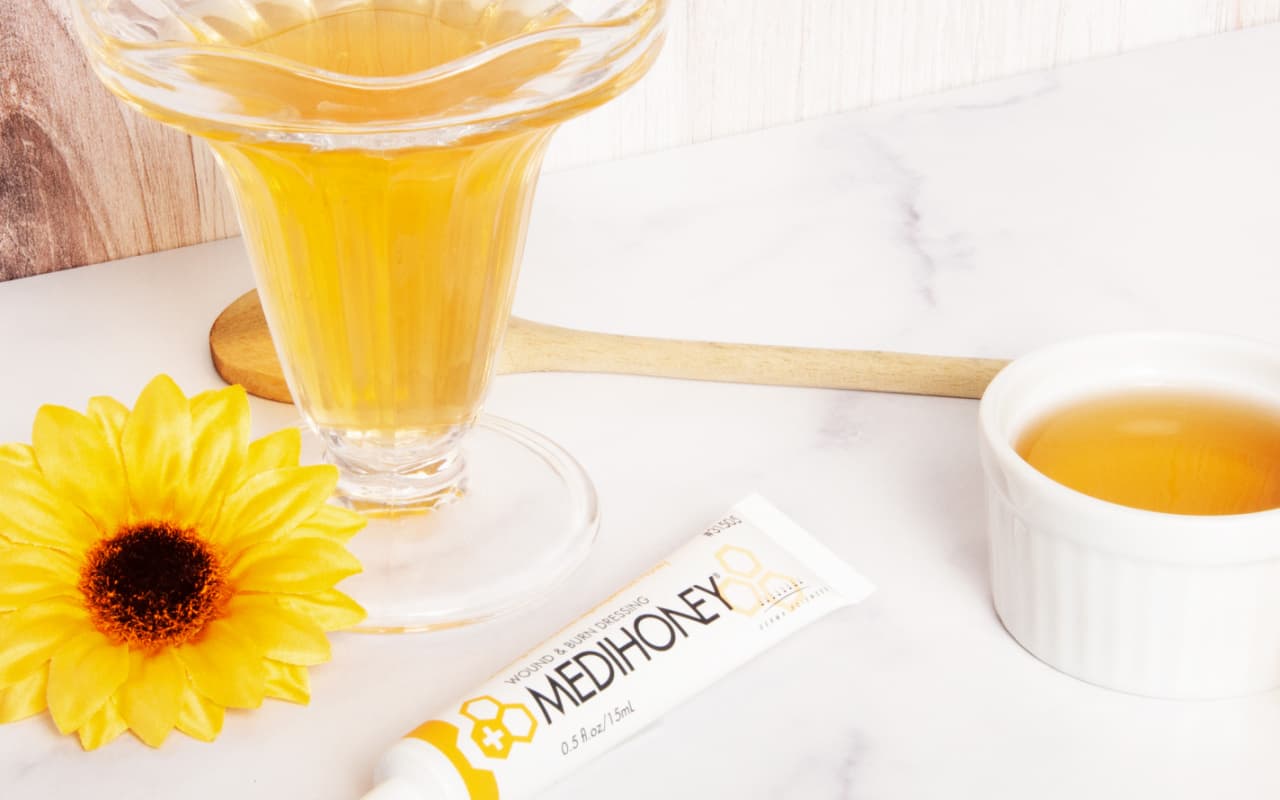
Honey's remarkable medicinal benefits have been recognized for over 5,000 years. This natural sweetener, long used in traditional medicine, finally received FDA clearance in 2011. This significant milestone was achieved when Derma Sciences, Inc., a New Jersey-based medical devices company, introduced their innovative MEDIHONEY® hydrogel to the market. Today, medical-grade honey products are a trusted solution in wound care, leveraging honey's natural properties to promote healing and manage various types of wounds.
What is MEDIHONEY?
MEDIHONEY® is a leading brand in wound and burn care, uniquely formulated with 100% Leptospermum (Manuka) honey. This special Manuka honey offers powerful antibacterial properties, making it highly effective against a broad spectrum of bacteria, including those that are typically resistant to other treatments. Unlike conventional antibiotics, Manuka honey prevents bacteria from developing tolerance, ensuring consistent effectiveness in wound management.
While MEDIHONEY shares a similar appearance to regular honey, it's crucial to understand it's a medical-grade product, not a sweetener. Its primary function is to provide an all-natural solution for treating open wounds, actively working to prevent serious complications like infection and even gangrene. A common challenge with advanced wounds is an unpleasant odor; thankfully, MEDIHONEY has been shown to decrease wound odors, significantly improving patient comfort and quality of life.
The efficacy of MEDIHONEY stems from its ability to draw moisture away from the wound, effectively "dehydrating" bacteria and decreasing bacterial growth. This creates an environment less conducive to microbial proliferation, promoting a cleaner healing process. Furthermore, MEDIHONEY possesses anti-inflammatory effects, which not only help to reduce pain but also speed up the healing time of existing wounds, offering a comprehensive approach to natural wound healing.
What’s the difference between MEDIHONEY and regular honey?
MEDIHONEY is different from regular honey in several ways. For one, it’s only produced by bees that pollinate the Manuka flower, a species of tea tree native to New Zealand.
Second, Manuka honey contains a much higher concentration of methylglyoxal (MGO) than regular honey. MGO is an organic compound known for its antibacterial and antiviral properties.
Each MEDIHONEY product has a unique Manuka factor (UMF) rating. The higher the UMF rating, the higher the level of MGO and other healing compounds. UMF ratings range from 0-16+. Any rating of 16 or higher indicates a superior solution.
What is MEDIHONEY used for?
MEDIHONEY® offers a versatile range of medical-grade honey products designed for advanced wound and burn care. Each unique formulation is crafted to address specific wound types and healing needs, leveraging the powerful antibacterial and healing properties of Manuka honey. Let's explore the various MEDIHONEY products and their primary treatment indications to help you understand how this natural solution can be effectively utilized in wound management.
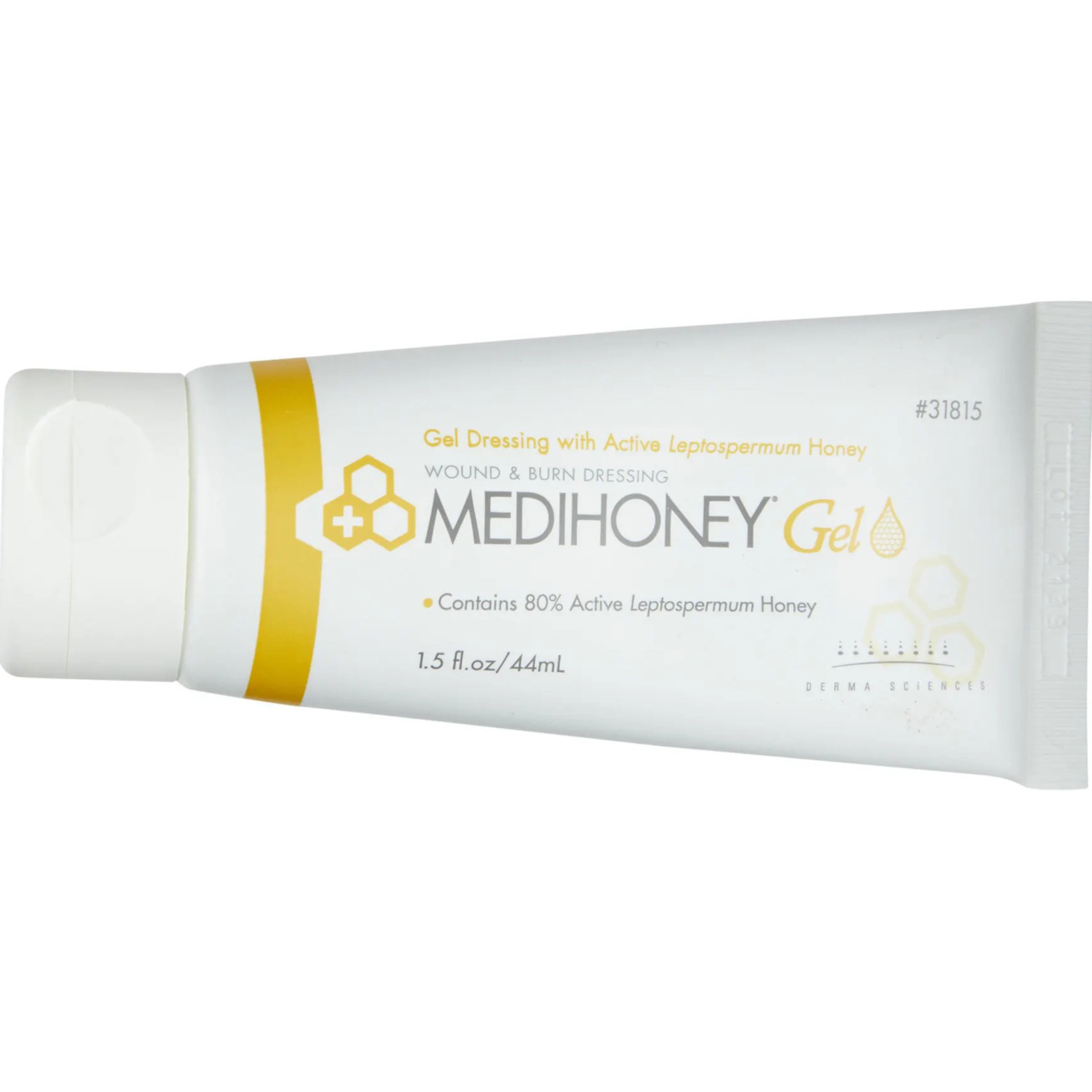
MEDIHONEY Wound and Burn Dressing Gel
MEDIHONEY wound and burn dressing gel contains a formula of 80% Active Leptospermum Honey (Manuka honey) and 20% natural gelling agents. It’s recommended for the treatment of non-draining to moderately draining wounds, including:
Diabetic ulcers
Venous stasis ulcers
Arterial ulcers
Leg ulcers
Pressure ulcers
Burns
Donor sites
Traumatic wounds
Surgical wounds
MEDIHONEY Wound Paste
MEDIHONEY wound paste contains a formula of 100% Active Leptospermum Honey (Manuka honey). It’s recommended for hard-to-dress wounds, including:
Tunneled wounds
Undermined wounds
Wounds affecting the sinus tract
Surgical wounds
Pressure ulcers
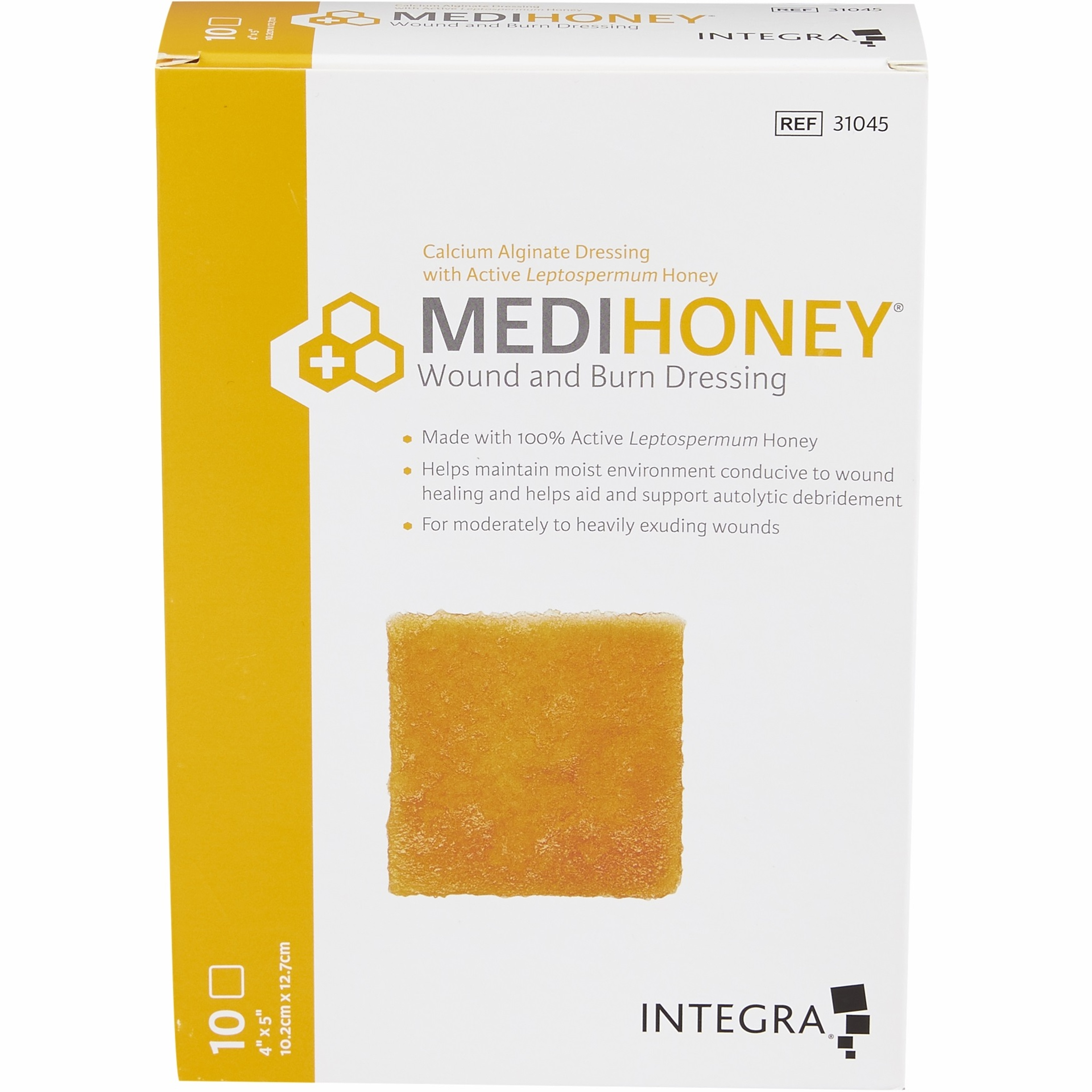
MEDIHONEY Calcium Alginate Dressing
MEDIHONEY calcium alginate dressings look similar to bandages. They’re 4” x 5” and contain Active Leptospermum Honey (Manuka honey). When wound drainage comes in contact with the calcium alginate dressing, it releases Manuka honey, forming a gel. The gel cleanses and debrides the wound, creating an optimal healing environment.
Calcium alginate dressings are recommended for:
Partial or full thickness wounds
MEDIHONEY Calcium Alginate Dressing Rope
MEDIHONEY calcium alginate dressing rope is three-fourths of an inch in diameter. These strips are ideal for application on partial to full thickness wounds that are relatively small in size, including:
Pressure ulcers
Surgical incisions
Tunneling wounds
Sinus tracts
Donor tissue sites

Do you need a prescription for MEDIHONEY?
In the United States, you don’t need a prescription for MEDIHONEY. All MEDIHONEY products are FDA cleared for over the counter (OTC) sales and can be purchased at most major retailers, including grocery stores, big box stores, and right here on Carewell.com.
How do I use MEDIHONEY?
Before applying a MEDIHONEY product to your loved one’s wound, carefully read the instructions on the packaging. Once you do, follow these simple steps:
Thoroughly clean the wound with a saline solution. Then, if necessary, apply a barrier cream around the edges of the wound. Barrier cream prevents skin breakdown and infection.
Apply the MEDIHONEY gel or paste directly to the wound. If you’re using a calcium alginate dressing, use sterile scissors to resize it, and then gently apply the dressing to the wound bed.
Cover the MEDIHONEY gel, paste, or alginate dressing with an absorbent sterile, secondary bandage or a compression garment.
When it’s time to change the dressing, thoroughly clean the wound with a saline solution. Once you do, repeat the same steps.
Keep in mind that it’s best that MEDIHONEY be on the skin for 12-24 hours at a time for maximum effectiveness. If you or your loved one is having a hard time keeping the dressing intact, soak a gauze dressing in the MEDIHONEY (or use the MEDIHONEY square dressing) and apply it directly on the wound, then top with an abdominal pad dressing.
When using MEDIHONEY will I need any extra supplies?
To properly apply MEDIHONEY, you’ll need:
Your desired MEDIHONEY product
A saline cleaning solution
Sterile scissors
Absorbent secondary bandages, a gauze pad, or a compression garment
MEDIHONEY calcium alginate dressings can be safely worn for up to seven days. Change the dressing as soon as the secondary bandage reaches its absorbent capacity, or as prescribed by your loved one’s primary care physician.
We hope you’ve found our guide to MEDIHONEY helpful. If you have any questions, please reach out to our friendly, supportive Care Team at (800) 696-CARE or send an email to support@carewell.com.
Other Articles You May Like
Best Wound Care Products for Seniors of 2025
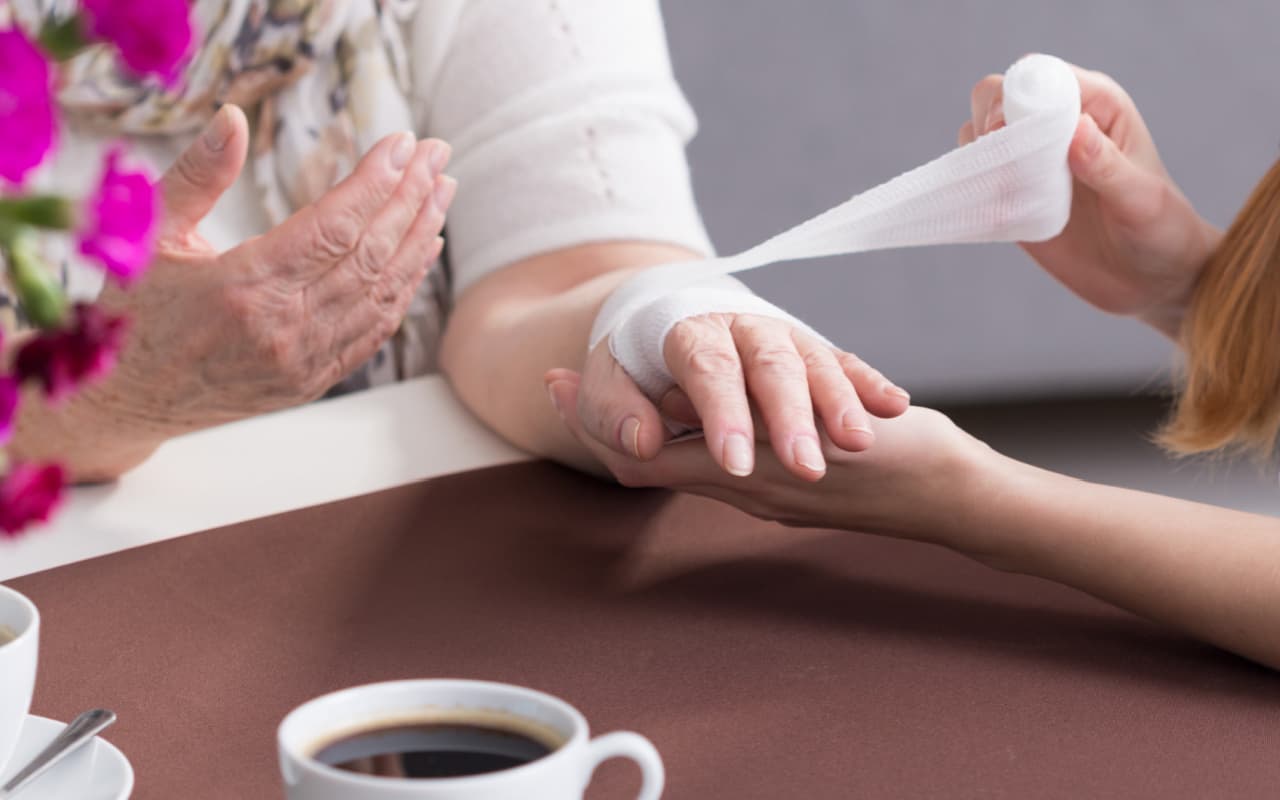
Wound care is something all people need from time to time. If you fall and scrape your knee, cut yourself while making dinner, or have a wound from surgery to tend to, it’s important to know how to clean and care for the injury to prevent infection and other serious issues.
Read More >
How to Prevent and Treat Bedsores: A Caregiver’s Guide
Bedsores, also known as pressure ulcers, are wounds that appear on the body as a result of inactivity for extended periods.
Read More >
Chad Birt
Chad Birt is a freelance medical writer who resides in Astoria, Oregon. When he isn't behind a keyboard, you can find him hiking, camping, or birdwatching with his wife Ella and their two dogs, Diane and Thoreau.